
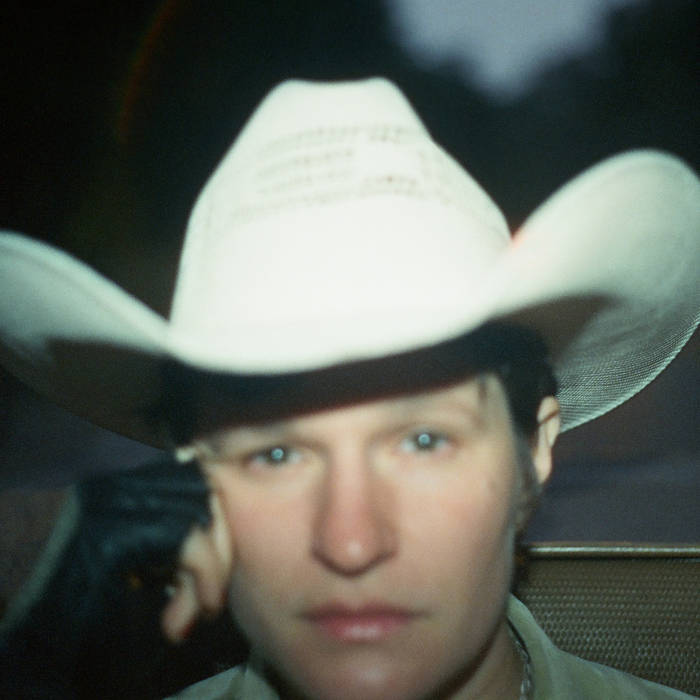
Adrianne Lenker – Bright Future
The Big Thief frontwoman’s newest album solidifies her as one of this generation’s best songwriters, with a series of subtle and lovelorn folk ballads.
The “quantity vs quality” debate in the art world can easily be disproven by looking at Adrianne Lenker’s body of work. It’s easy to forget how prolific an artist she is, given the consistently high standard of her projects. At just 32 years old, she has already released 11 studio albums – both solo and as part of Big Thief – with her first project, Stages Of The Sun, releasing in 2006 when she was only 14. Over the course of the last decade, she has seen her stock rise from a plucky Midwest singer-songwriter to an undeniable star of the indie scene, headlining festivals as the leader of one of alternative music’s most exciting new groups, yet never abandoning her true-blue folk roots.
It’s been four years since the pandemic-era double-bill of songs and instrumentals, two deceptively simple collections of lo-fi breakup ballads, but Lenker has remained busy with Big Thief in the meantime, reaching new heights with the Grammy-nominated and bizarrely-titled 20 song opus Dragon New Warm Mountain I Believe In You. Amidst the album’s success, Bright Future was quietly being recorded directly to tape at a remote studio in the woods. As DNWMIBIY expanded Big Thief’s sound into new, louder and more rock-centric territory, Bright Future remains stripped back, meditative, and homely in its demo-like quality and frank lyricism. It sees Adrianne Lenker distil the bittersweetness of her lyrics into some of her most potent and thought-provoking songs yet, with a tracklist that rewards repeated listens and varied interpretations.
Like many of Lenker’s finest works, Bright Future manages to tug at the heartstrings with beautifully subtle instrumentation and carefully considered lyrics, while also rarely seeming resolute in what specific emotions each track should stir. It’s a musical Rorschach test, where each listener can come to their own conclusions about the album’s themes and sentiments and still likely be correct. While the album’s title may seem like a misnomer, each devastating revelation is contrasted with a twist of optimism – a glimmer of hope in a world where thinking about where we’re headed can feel so distressing.

The opening track, ‘Real House’, is less of a song and more of a preamble. Over a scant piano backing, Lenker reminisces about dark childhood memories – the first film that scared her, bleak hospital visits, and putting down the family dog – and her relationship with her mother through it all. With its elusive rhyme scheme and free-flowing structure, punctuated occasionally by a dissonant piano chord, it reads like a poem to establish the wider themes of the album: love, family, death, the past, and the future.
From here, Bright Future really hits its stride with a run of ingeniously crafted indie-folk cuts. Each song embraces traditional elements while still sounding new enough to completely hold the listener’s attention. ‘Sadness As A Gift’ is a particular highlight of Lenker’s solo career so far, with her distinct Americana twang lending itself to the most commanding vocal performance of the record: “You and I both know there is nothing more to say // Chance has shut her shining eyes and turned her face away // Leaning on the windowsill, you could write me someday, and I think you will”. Paired with gorgeous string and piano arrangements and plenty of memorable refrains, it feels like a classic folk ballad that should already have existed for fifty or sixty years, but with a mix pristine enough to give it a modern edge.
“…Adrianne Lenker distil[s] the bittersweetness of her lyrics into some of her most potent and thought-provoking songs yet…”
The following handful of tracks tend to focus more on the present, where Lenker can reflect on domesticity and love. ‘Fool’ is easily the brightest song on the album; it’s infectiously playful through its plucky rolling guitar leads and lyrics recounting the recent successes of those closest to Adrianne. ‘No Machine’ feels confident in its affirmations of love by imagining every future detail of a relationship with absolute certainty, where the hook of “I don’t know what I’d do without you” becomes more of a confession of undying love than a fear. ‘Free Treasure’, meanwhile, focuses on the minute details of daily life with a partner – good food, good music, beautiful surroundings – before an intrusive thought threatens to interrupt: “There’s a guy on the nape of my neck, and he hangs out there all day // He quantifies my every thought, and tells me not to play”. In the company of a loved one, however, Lenker realises she can be fully open and work past these mental limitations in one of the album’s sweeter endings.
The album version of ‘Vampire Empire’, a hugely successful single for Big Thief from last year, is likely to split opinion based on personal preferences. Where the single version is cleaner, more calculated, and rocks a little harder, the rough quality of the lo-fi recording here almost makes the song feel more complete in an ironic way. With faster strumming, slower and more laboured vocals, and a much more jagged mix, there’s a certain bite to it that other versions of the song don’t quite provide, complementing its lyrical exploration of a dangerous relationship nicely.
After reaching its half-way point, Bright Future unfortunately hits its only relative weakspot, with songs that mostly stand up to criticism, yet don’t quite match the level of other cuts here. ‘Evol’ provides a charming concept with its wordplay, but one that feels below the high bar of Lenker’s songwriting, and which overstays its welcome as she tries to wring every last drop from the idea. ‘Candleflame’ is comparatively brief and much more intentionally vague in its lyricism, as Lenker describes the strange emotions stirred by the most mundane of events. It’s a powerful piece while it’s on, but one of the less memorable cuts on the project, which can also describe ‘Already Lost’.
Luckily, Bright Future sticks the landing with a final act that ties up all its loose ends and motifs perfectly. ‘Cell Phone Says’ is perhaps the most bare song here instrumentally, but it rewards repeated listens and heightened attention with its intricate and surreal writing. It’s a story of an emotional connection felt through a phone call, despite the distance the conversation is taking place over – reminiscent of the long-distance longing found on ‘Sadness As A Gift’.
“…each listener can come to their own conclusions about the album’s themes and sentiments and still likely be correct.”
‘Donut Seam’ might be the strongest non-single on the record, summarising how Lenker views her own future – “This whole world is dying // Don’t it seem like a good time for swimming? // Before all the water disappears?” It’s existential, lovelorn, and effortlessly powerful with its duet vocals and frank lyrics. The final moment of the album, ‘Ruined’, was fittingly the first single from its rollout. It ends on a dour note, where all the naive optimism of the previous songs seems to have faded away. The constant presence of the hook makes it feel desperate and longing, and throws a new, unsettling light onto the record as a whole in its closing moments.
Don’t be fooled by Bright Future’s rough-and-ready production values, as what Adrianne Lenker provides on this album is perhaps the most delicately crafted and impressive series of songs in her solo career so far. Even its weaker efforts stand up to scrutiny in many regards. In an era of music where folk and country influences are becoming increasingly common, Lenker deserves to be at its forefront – and while Bright Future clearly doesn’t have its ambitions set on making her a household name, it has all the emotion and rocksteady quality to earn her a place in the limelight. It’s another win in the column for a songwriter who must undoubtedly be in the conversation for her generation’s finest at this point.
GRADE: A
Review by Max B.
 Record Scratch